
Most first-time misdemeanor DUI arrests in California end in release on your own recognizance or bail in the $2,500 to $10,000 range, while felony DUI or repeat offenses can push bail into the tens of thousands, sometimes past $100,000. The fastest path out of custody is calling a licensed bail agent or attorney with the booking number in hand, since that single step usually starts the release process within the hour.
TL;DR:
- Bail amounts for first-time misdemeanor DUI arrests typically range from $2,500 to $10,000, with felony or repeat offenses pushing bail into the tens of thousands or higher.
- County bail schedules establish presumptive amounts, but judges can deviate based on public safety, flight risk, and arrest specifics, especially for aggravating factors.
- Posting bail through a bond costs about 10 percent of the total bail amount as a nonrefundable premium, with release often happening within an hour once paperwork is processed.
- Misinformation persists that bail schedule numbers are fixed; in reality, judges have discretion to adjust bail based on case-specific evidence and community ties.
- Families can reduce bail or seek OR release at arraignment by providing proof of community ties, enrollment in treatment programs, or demonstrating inability to pay, which affects judicial decisions.
Table of Contents
- How California Sets DUI Bail Amounts
- What DUI Bail Actually Costs by County
- How Do You Post Bail After a DUI Arrest?
- What Does a DUI Bail Bond Actually Cost?
- Who Can Post Bail and What Do They Risk?
- What Makes DUI Bail Go Up or Down?
- Can You Get DUI Bail Reduced at Arraignment?
- What Happens If You Miss Court After Posting Bail?
- A Bail Bonds Professional's Take on Timing
- How Abaasy Bail Bonds Can Get You Out Fast
- Where to Verify Bail Amounts and Rules
- A Practitioner's Perspective on DUI Bail Myths
- Sources
- FAQ
How California Sets DUI Bail Amounts
Bail in California isn't decided case by case from scratch. Every county maintains its own bail schedule, built under authority from Penal Code §1269b, and the Judicial Council of California publishes a uniform bail and penalty schedule that counties use as a baseline. Judges lean on these schedules for speed, especially at arraignment when dozens of cases move through in a single morning.
A few things shape the number you actually see on the paperwork:
- County bail schedules set presumptive amounts by charge and prior record.
- "Total bail" bundles the base amount with statutory fees and assessments, so the number on your release paperwork is often higher than the schedule's headline figure.
- Penal Code §1275 gives judges room to deviate from the schedule based on public safety and flight risk.
That last point matters. The schedule is a starting point, not a ceiling or a floor.
What DUI Bail Actually Costs by County
Numbers vary by jurisdiction, but the pattern is consistent statewide: first offense costs the least, and every prior conviction or aggravating factor adds a significant jump.
Solano County's 2026 bail schedule lists presumptive misdemeanor DUI bail at $5,000 for a first offense, $7,500 for a second, and $15,000 for a third. Santa Clara County runs a similar tiered structure, with its 2026 criminal bail schedule showing figures that climb steeply for repeat offenders or felony-level DUI cases, reaching as high as $100,000 in cases with multiple priors.
What pushes bail higher:
- Blood alcohol content of .15 or above
- An accident involving injury to another person
- Felony DUI charges (typically a fourth offense within 10 years, or any DUI causing injury)
- Prior DUI convictions within the past decade
Every county schedule is a starting point. A judge at arraignment can and does adjust up or down based on the specific facts of your arrest, so treat these figures as a planning baseline, not a guarantee.
How Do You Post Bail After a DUI Arrest?
You generally have four routes out of custody, and they carry very different costs and timelines.
- Own recognizance (OR) release. No money changes hands. You sign a promise to appear, and it's typically requested and granted (or denied) at arraignment based on ties to the community and criminal history.
- Cash bail. You or a family member pays the full bail amount directly to the jail or court. It's refundable after the case resolves, minus administrative fees, but tying up that much cash for months is out of reach for most families.
- Bail bond. A licensed bondsman posts the full amount in exchange for a nonrefundable premium, discussed below. This is the route most people actually use.
- Property bond. You pledge real estate equal to or greater than the bail amount. Courts rarely favor this option because it requires appraisal and lien paperwork that slows everything down.
Before calling anyone, find your booking number and confirm which county jail is holding the person. That single detail speeds up every option on this list.
What Does a DUI Bail Bond Actually Cost?
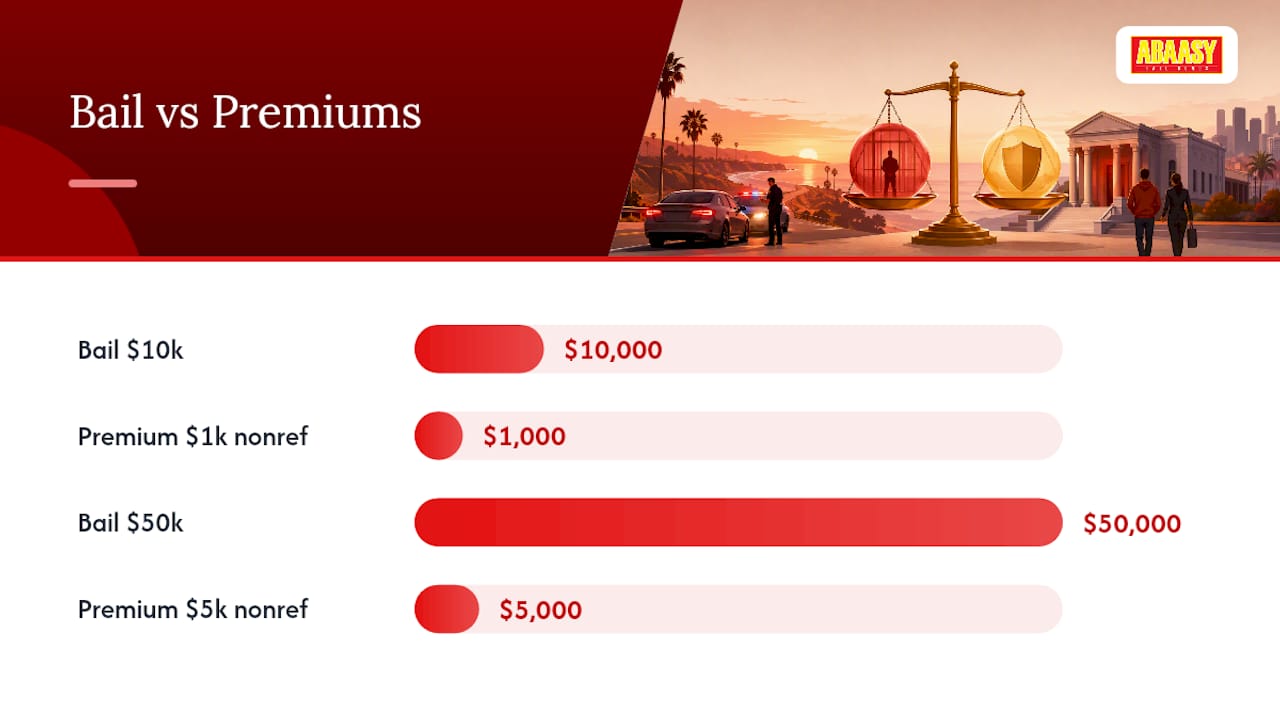
Bail bond premiums in California run at 10 percent of the total bail as standard market practice, and that fee is nonrefundable regardless of case outcome, according to Shouse Law Group. On a $10,000 misdemeanor DUI bail, that's a $1,000 premium instead of $10,000 in cash tied up for months. On a $50,000 felony bail, the premium runs $5,000. You can read a full breakdown of how bail bond costs work in California if you want the math for larger bail amounts.
A licensed agent coordinates directly with the jail and the court to post the bond, and release often happens within an hour once paperwork clears, though outstanding warrants or booking backlogs can add delays outside the agent's control.
What to expect from a bondsman:
- 24/7 availability, since arrests don't happen on a schedule
- Bilingual service for families more comfortable communicating in Spanish
- Upfront pricing with no hidden fees added after the fact
- Payment plans for families who can't cover the premium in one lump sum
Pro Tip: Ask about payment plan terms before signing anything. A flexible, no-interest plan spread over several months beats scrambling to cover a premium in one payment, and reputable agents will explain the terms clearly upfront.
Cosigners should understand they're financially responsible if the defendant skips court, and agents may require collateral on larger bonds. Understanding how the bond process works from start to finish before you sign helps avoid surprises later.
Who Can Post Bail and What Do They Risk?
Anyone can post bail for someone else, whether that's a parent, spouse, or friend. When a bondsman is involved, the arrangement becomes a three-way contract between the defendant, the cosigner, and the bail agent.
- Courts can scrutinize the source of bail funds if there's suspicion the money came from illegal activity.
- Cosigners accept financial liability for the full bail amount if the defendant misses court.
- Some agents require collateral, like a vehicle title or property, on higher bail amounts.
Sign a bond agreement only after you understand exactly what you're agreeing to cover if things go wrong.
What Makes DUI Bail Go Up or Down?
Judges weigh public safety, flight risk, and ability to pay under Penal Code §1275, and several specific factors move the number in either direction.
Factors that raise bail:
- Prior DUI convictions within 10 years
- BAC of .15 or higher
- An accident causing injury
- Felony enhancement allegations
Factors that support a reduction: steady employment, a fixed address, enrollment in a treatment program, and a financial declaration showing the schedule amount is genuinely out of reach. Repeat offenders face a materially different calculation, and how California's rules affect bail for repeat offenders is worth understanding before your hearing.
Can You Get DUI Bail Reduced at Arraignment?
Yes, and the mechanics are straightforward if you show up prepared. At arraignment, your attorney can formally request OR release or a bail reduction, and the judge weighs the same public safety and flight risk factors from Penal Code §1275.
- Gather proof of community ties: a recent pay stub, lease or mortgage statement, or an employer letter.
- Prepare a financial affidavit if you're requesting reduction based on inability to pay.
- Bring documentation of any enrollment in an alcohol treatment or education program.
Judges increasingly order alcohol monitoring or supervised release instead of high cash bail, particularly for first offenses.
Pro Tip: A pay stub or lease agreement in hand at arraignment does more to move a judge than any verbal promise. It directly answers the flight-risk question the law requires the court to consider.
What Happens If You Miss Court After Posting Bail?
Missing a court date triggers a bench warrant almost immediately, and the court can declare the bail forfeited. That means the bond company or whoever posted cash could be out the full amount unless it's resolved quickly.
- A bench warrant issues for arrest, often the same day as the missed date.
- Forfeiture proceedings begin on the bail amount.
- A motion to set aside forfeiture or a prompt surrender can sometimes reverse the damage.
Call your attorney and your bail agent the moment you realize a date was missed. Waiting makes every option worse, and the specifics of what happens if you miss a court date after bail matter more the longer you wait to act.
A Bail Bonds Professional's Take on Timing
Release within the hour is realistic when an agent has the booking number, ID, and funds ready to go. Delays usually trace back to outstanding warrants, a felony hold, or a slow booking process at the jail, not the bail amount itself.
Before you call anyone, have this ready: booking number, jail location, the defendant's full name, and your relationship to them. Coordinate a bondsman for speed and an attorney for strategy. They solve different problems, and you need both.
How Abaasy Bail Bonds Can Get You Out Fast
A bail bonds service is the practical answer once you've read through the schedules and the statutes and just need someone out of custody quickly. Where a public defender's office or a general law firm can advise you on strategy, they typically won't post the bond itself, and that's the gap these services fill, often with agents available 24/7 across California.

A first call can get you a clear premium quote with no hidden add-ons, bilingual support if that's more comfortable, and a payment plan option if covering the premium in one shot isn't realistic for your family right now. Many clients see release within the hour once paperwork and funds are confirmed with the jail. Use a bondsman for the fast release and an attorney for the legal fight ahead. If you're facing a DUI bail situation right now, contact Abaasy Bail Bonds and get the release process started.
Where to Verify Bail Amounts and Rules
Check the Santa Clara Superior Court bail schedule or Solano County bail schedule for county-specific figures, the Judicial Council's uniform schedule for statewide guidance, and the California Department of Justice bail overview for how bail purpose and holds work. Always confirm against the schedule for the specific county where the arrest happened, since amounts differ by jurisdiction.
A Practitioner's Perspective on DUI Bail Myths
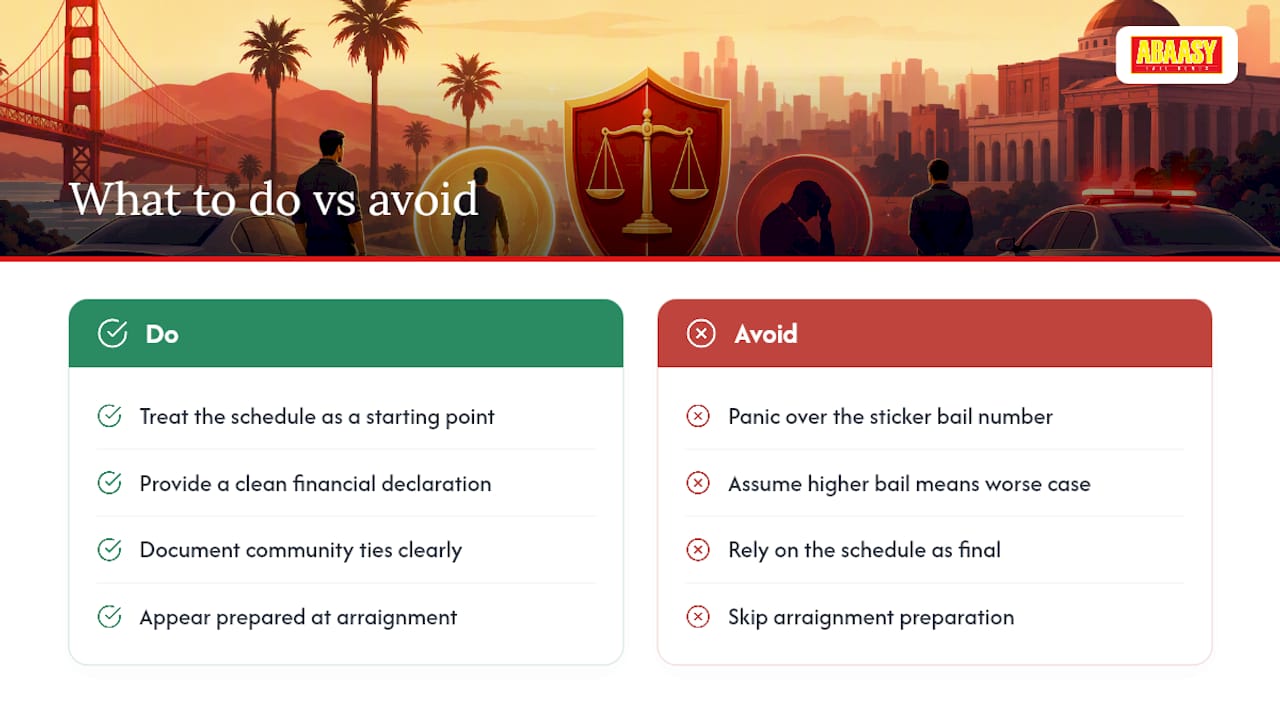
The biggest misconception families walk in with is thinking the bail schedule number is fixed and final. It isn't. County schedules exist for consistency and speed at arraignment, but Penal Code §1275 hands judges real discretion to move that number based on the specific facts in front of them, not a chart on a wall.
The second misconception is assuming higher bail always means a worse case. Sometimes it just means the arresting county runs a stricter baseline schedule than the county next door. Santa Clara and Solano post different numbers for comparable charges, and that gap has more to do with local policy than the severity of what happened. Families who understand this stop panicking over the sticker number and start focusing on what actually moves it: a clean financial declaration, documented ties to the community, and showing up to arraignment prepared instead of hoping for the best. That preparation, more than any negotiating tactic, is what gets bail reduced or converted to OR release.
— william
Sources
- Santa Clara Superior Court — 2026 criminal bail schedule
- Solano County — 2026 bail schedule
- Judicial Council of California — Uniform bail and penalty schedules
- California Penal Code §1275 (FindLaw)
- Shouse Law Group — Bail for DUI in California – 5 Key Things to Know
FAQ
How much is bail for a first-time DUI in California?
First-time misdemeanor DUI bail typically starts around $5,000 under county schedules like Solano's, though some counties set the baseline lower, and courts often grant OR release for first offenses with no aggravating factors.
What is the most common plea for DUI?
Most misdemeanor DUI cases resolve through a negotiated plea rather than trial, though the specific terms depend heavily on BAC level, prior record, and whether an accident was involved.
How likely is jail time for a first DUI in California?
Many first-time misdemeanor DUI arrestees are released on OR or modest bail and never serve jail time before trial, since immediate detention often depends more on local booking practices than the bail amount itself.
What is the 3-hour rule for DUI in California?
Officers generally must administer a chemical BAC test within three hours of driving for the results to carry a legal presumption of accuracy under California's implied consent framework; testing outside that window can still be used but with less evidentiary weight.
Can a bail bond premium be refunded if the case is dismissed?
No. The 10 percent premium paid to a bondsman is a nonrefundable fee for the service of posting bond, regardless of whether the case is dismissed, reduced, or goes to trial.